

THE SHORT ANSWER
Here’s where to start.
Your first AI game should have one clear action, a visible goal and a round you can restart. A collection game, lane dodger or short puzzle gives you enough to learn without needing a large world. Choose something you can describe in a sentence before you ask AI to build it.
Before you start
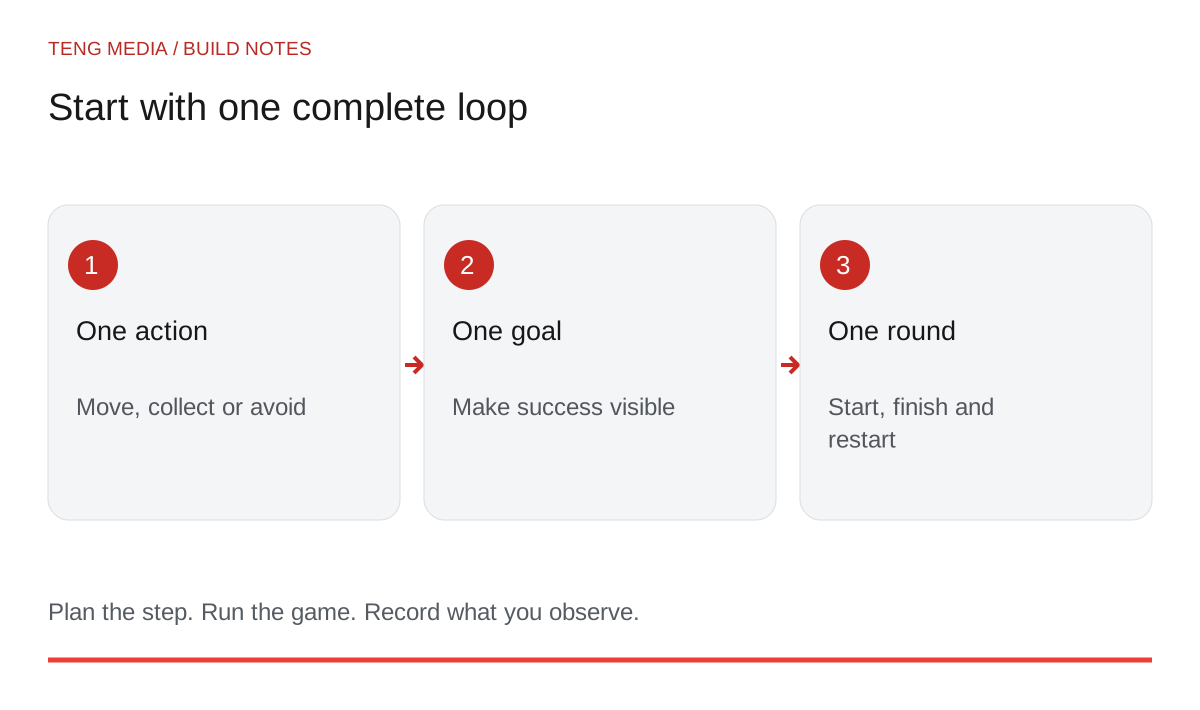
The ideas below are original practice briefs. Start with simple shapes and one playable space. Save the larger version for after someone can finish a round.
Choose the action you want to build
| Game idea | Smallest complete version | The main lesson | Leave for later |
|---|---|---|---|
| Lantern Collector | Collect five lights in one room and reach an exit | Pickups, score and win conditions | Inventory and equipment |
| Falling Parcel | Move between three lanes to avoid falling boxes | Input, spawning and collision | Multiple vehicles and tracks |
| Signal Match | Repeat a sequence of four flashing symbols | State and feedback | Online leaderboards |
| One-Room Escape | Find three clues and open one door | Interactions and puzzle state | A building full of rooms |
| Rooftop Courier | Deliver one package across five platforms | Movement and collision | A city and mission system |
| Garden Catch | Move a basket to catch ten falling seeds | Timing and scoring | Farming and crafting |
| Tiny Tower Guard | Stop three waves using one attack | Enemy behavior and rounds | Talent trees and shops |
| Switch Path | Toggle floor tiles to reach a marked square | Rules and level state | Procedural levels |
| Harbour Sort | Send three parcel types to matching docks | Classification and pacing | Business simulation |
| Star Finder | Locate five hidden stars in one scene | Click targets and feedback | A hundred illustrated scenes |
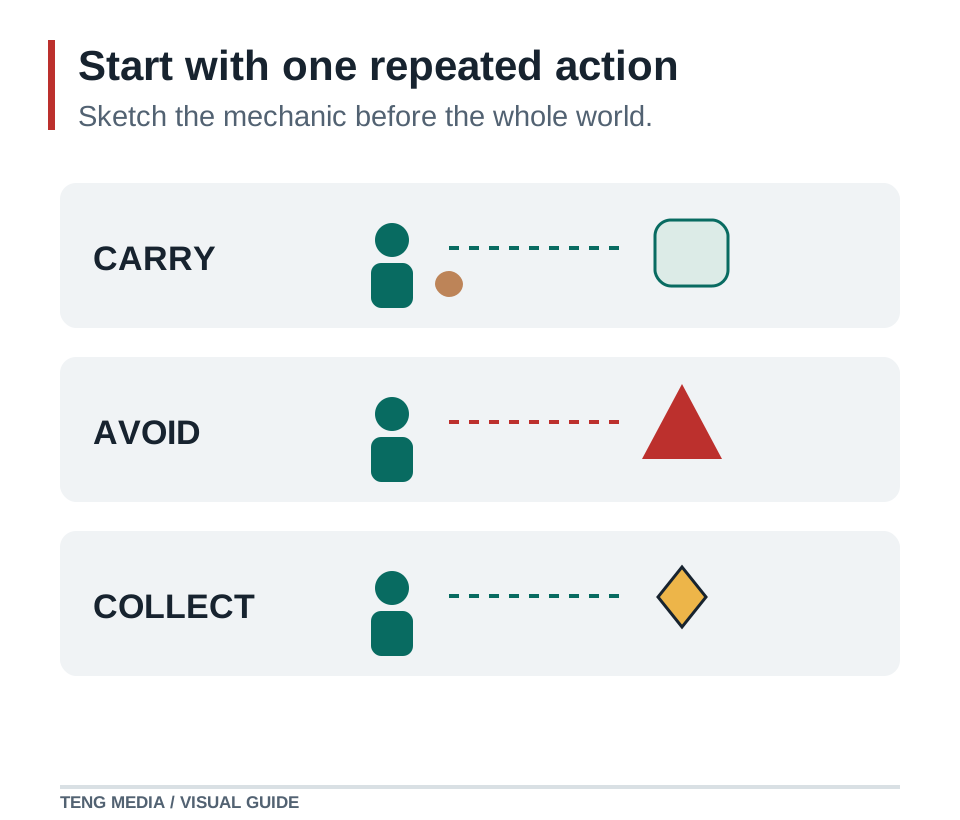
Pick the idea whose repeated action interests you. A short game you want to replay is a stronger starting point than an ambitious project whose first milestone is still unclear.
Reduce the idea before adding features
Imagine choosing Rooftop Courier. The tempting version includes a city, a delivery economy, weather, pedestrians and customizable characters. The first useful version needs only movement, a package, a destination and a way to restart after falling.
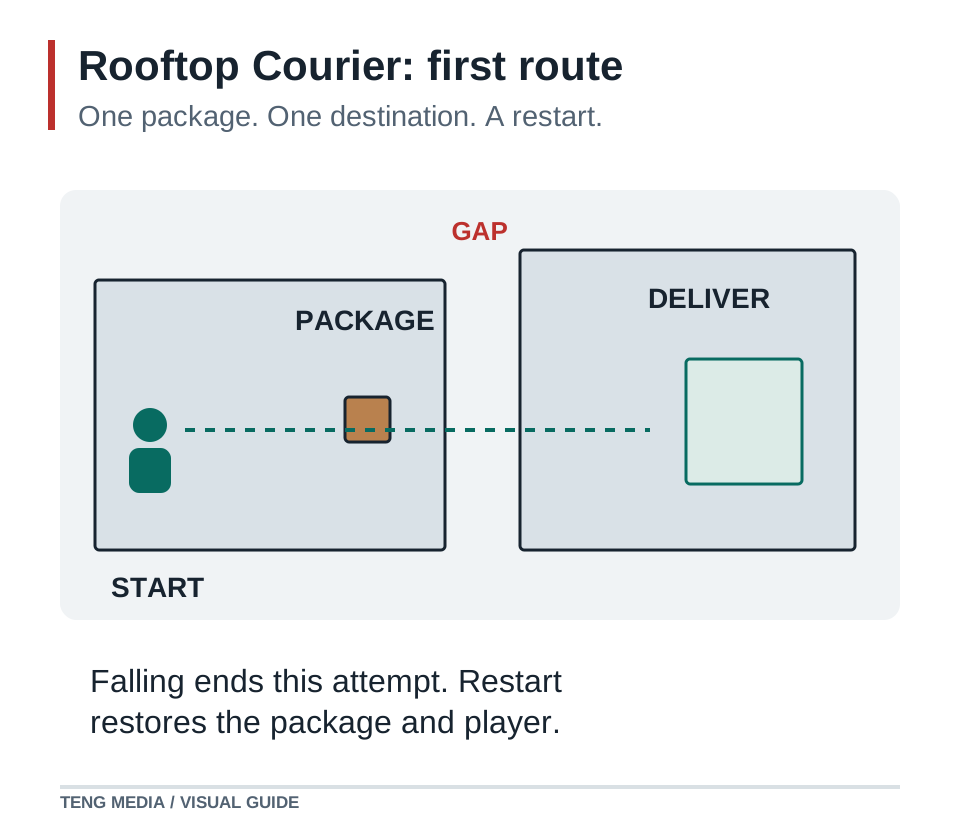
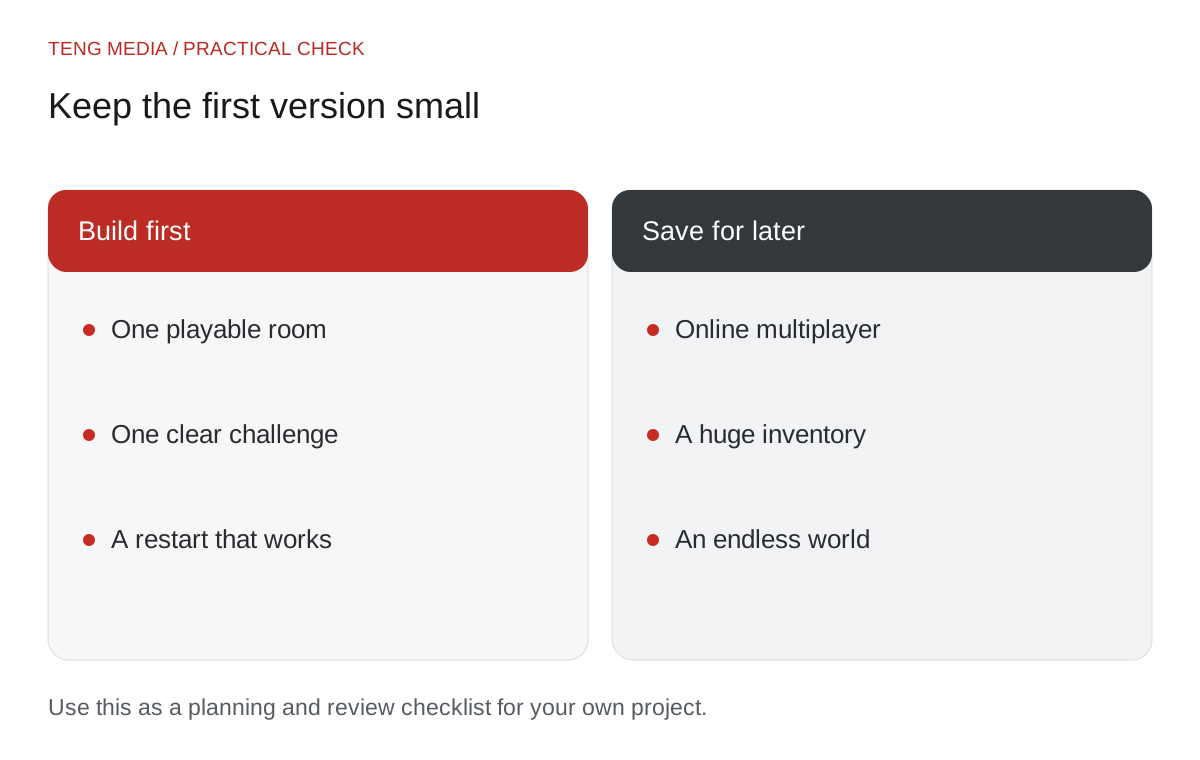
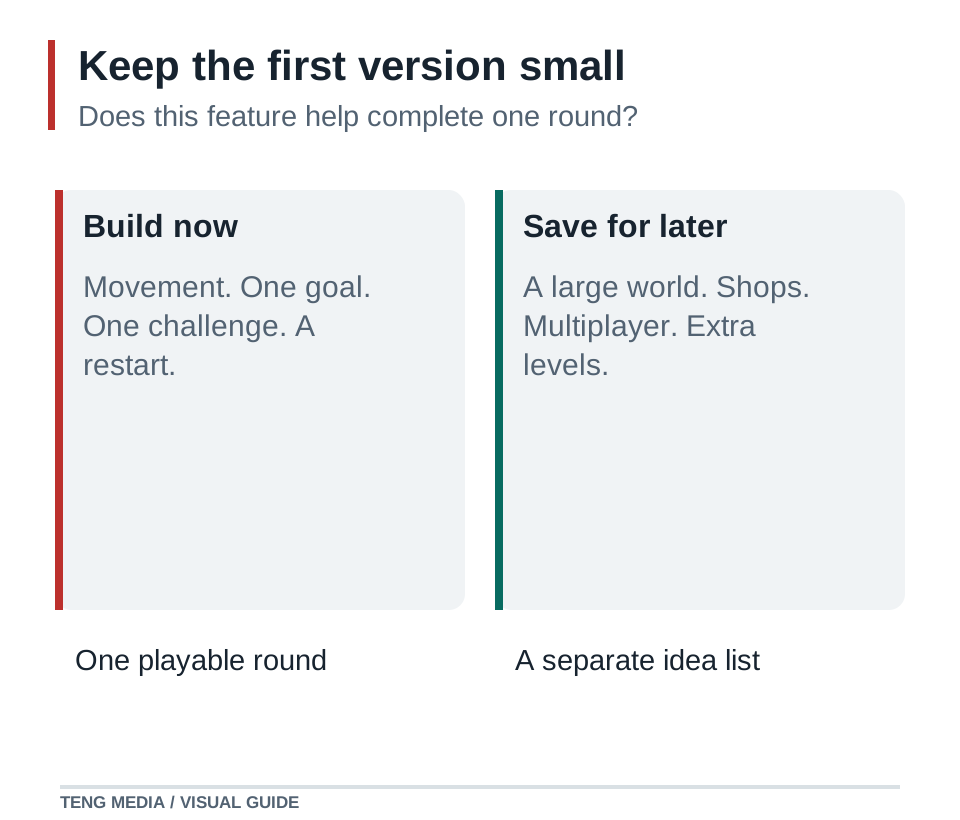
Write two lists: needed to finish one round and interesting later. A feature belongs in the first list only if the round cannot make sense without it. Keep the second list; postponing an idea is easier when you know you have not lost it.
Some short descriptions hide substantial work. “Play with friends” can introduce networking and synchronization. “Generate infinite levels” requires rules that produce playable layouts. “Remember everything” needs a save design. Treat each of those as its own future project decision.
Give AI a finish line
Use this brief after selecting your idea:
Help me plan a small [game idea] in [engine and exact version].
The player repeatedly [one action].
The player wins by [visible condition] and loses when [condition].
A round takes place in [one bounded space].
Controls: [keyboard, mouse or touch].

Use placeholder shapes. Exclude [three tempting extras].
List the smallest sequence of playable checkpoints.
For each checkpoint, state what I should see and how to check it.
Do not implement the entire plan at once.
If the plan begins with a shop, account system or elaborate artwork, bring it back to the action. Ask what the player can do after the first checkpoint. “A player can move and stop inside the room” is concrete. “The architecture is ready” does not yet give you something to play.
Our first-game guide shows how to turn a small brief into a series of testable changes.
Check whether the idea is still small
Before building, answer these questions:
- Can a new player understand the goal in one sentence?
- Can you show the whole first level on a simple sketch?
- Is there one main control action?
- Can the player finish or fail without an account or another player?
- Can you describe exactly what Restart resets?
If several answers are unclear, reduce the scope. For Tiny Tower Guard, one enemy type and one attack can teach the central loop. More enemies only help after that loop works.
Make the first successful round your milestone
Once the player can start, act, win or lose, and restart, ask someone to try it without instructions from you. Watch where they hesitate. That observation tells you whether the next useful change is clearer controls, better feedback or a different challenge.
You do not need ten ideas in development. Choose one, write its small brief and build its first checkpoint.
Want a learning routine around your project? TENG AI SCHOOL membership includes school materials, weekly group coaching calls and access to submit games for publication review. Compare monthly and yearly access.
Common questions
How small should my first AI game be?
Choose one action, one goal and one bounded space. Finish a complete round before adding another system.
What is a good first game to make with AI?
A one-room collection game is a useful starting point: move a player, collect a few objects, show a win state and restart. You can check each rule separately before combining them. A short lane dodger or tile puzzle can work for the same reason.
Can I begin without drawing characters or building a large world?
Yes. Use simple shapes and one small play area while you establish the rules. Replace the temporary visuals after a player can complete a round. This lets you discover movement and collision problems before investing in final artwork.

